
Your heat has been working well all fall, and you fell asleep last night in perfectly cozy warmth. But as the temperature outside dropped, so did the temperature inside your home. Now you're waking up to ice-cold floors and a thermostat reading 62°F.
But before you start disassembling your heating system or making a trip to the basement with a toolkit, there are several simple troubleshooting steps you can try. And if you're still without heat afterward, it's time to call your local HVAC company.
While we are sure you have successfully tackled plenty of home repairs, HVAC systems are a different story. They are complex machines, and one wrong move can damage your equipment or put your safety at risk. Fortunately, you are not entirely powerless when something goes wrong. By following the steps below, you may be surprised to find that you can resolve the issue without a single hand tool. At the very least, you will be able to provide your trained HVAC technician with more details to help diagnose the problem.
Where to Start?
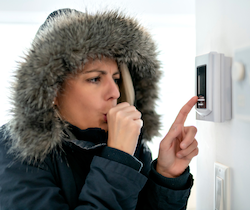
Start with your thermostat. First, check the batteries in each thermostat throughout your home. A thermostat with dead batteries may prevent your system from operating as expected. If you are unsure how to replace them, consult your owner's manual or HVAC technician.
Next, check the thermostat's mode. It's easy to accidentally switch from heat to cool, especially when adjusting settings throughout the changing seasons. If it's set incorrectly, switch it back to heat (or cooling during the summer) and give your system some time to respond.
If the mode is correct, take a closer look at the programming. If you have a programmable or smart thermostat, you may have a schedule that is keeping your home cooler than intended. Check for vacation, away, or other energy-saving programs that may have been activated. Adjust the settings as needed and give your system time to bring the temperature back up.
That Wasn't the Problem. What's Next?
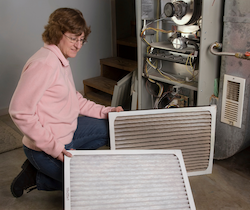
It's time to check your air filter! If you are unsure where it is located, your system's owner's manual should provide instructions. If you can't find your manual, you can often download a digital copy online. Just be sure to verify your equipment's make and model before relying on online guidance for filter size or specifications. HVAC systems have different requirements, and using the wrong filter can restrict airflow or affect system performance.
Once you have located the filter (or filters), check whether they appear dirty or clogged. A filter that's heavily coated in dust and debris can restrict airflow enough to interfere with heating or cooling.
Your owner's manual should also provide recommendations for how often the filter needs to be cleaned or replaced. However, certain circumstances may cause it to clog sooner than expected. Recent home renovations, for example, can introduce significant dust and debris into the air. Adding a pet to your household can also increase the amount of airborne particles your filter captures.
If your filter is dirty and disposable, replace it according to the manufacturer's instructions. If it's washable, follow the recommended cleaning instructions. Be sure to use the correct size and filtration rating for your system. You may even want to write the replacement date on the filter frame to make it easier to keep track of future changes.
If you notice buildup deeper inside your equipment, leave the fan, coil, and internal components alone. Those are best left to your HVAC technician.
Still No Luck? It's Time to Put on Your Coat.
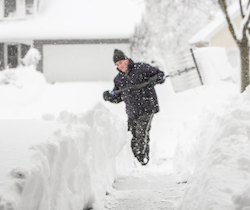
Head outside and take a look around your outdoor unit. You might be surprised at what you find! Snow, ice, leaves, twigs, branches, grass clippings, and other debris can obstruct airflow and interfere with your system's operation.
Carefully clear away loose debris and shovel snow away from the unit. If ice has accumulated on the equipment, don't chip or break it off, as you could damage the unit. If you have a heat pump and notice significant ice buildup or that it isn't defrosting as expected, it's time to call a professional.
Check your manufacturer's clearance requirements if you are unsure how much space to leave around the equipment. If you plan to gently wipe down the exterior, turn off the system first. Keep all panels and guards in place, never reach through the grilles or fan, and avoid power washing.
Before heading back inside, clear a path to your outdoor unit so your HVAC technician can easily access it if a service visit is needed.
Keep Looking!
If you have a ducted system, your indoor vents may need attention, too. Rugs, furniture, or other household items can easily block supply vents, restricting airflow into certain rooms. If you're experiencing uneven temperatures, check to make sure your vents are unobstructed.
While you're at it, take a moment to wipe away any dust around the vent openings. If you suspect loose debris just inside the duct opening, you can remove the vent cover and carefully vacuum the accessible area using your vacuum hose. Avoid reaching deep into the ductwork.
Give your system a little time to run and see whether clearing the vents improves airflow or comfort.
It's Time to Call a Pro…

At this point, it's best to stop troubleshooting and call a professional. Continuing to investigate or attempting repairs without the proper training and tools isn't likely to help.
Contact your local HVAC service provider. Many companies offer emergency service for heating issues, especially during the colder months.
When you call, explain what happened and describe the symptoms as clearly as possible. It helps to share what you noticed first, any thermostat settings you changed, when you last checked or replaced your filter, and whether certain rooms are warmer than others. The more information you can provide, the better prepared your technician will be to diagnose the issue.
Never Hesitate to Call!
If you're unsure whether your heating system is working well enough to warrant a service call, don't hesitate to reach out. You may be noticing the early signs of a problem before it becomes a bigger issue.
Keeping your home comfortable and safe throughout every season is a priority. If something doesn't seem right, trust your instincts and let an HVAC professional help!
Need expert help?
Total Temperature Control helps homeowners throughout Greater Boston and the North Shore evaluate heating and cooling options. If you have any questions or concerns, feel free to contact us.
Whether you need 24/7 emergency service or a solution to improve your indoor comfort—at home and work—call us at781-224-2400 or submit a convenient contact form.
